The 13 organizations* part of the EDMO fact-checking network that contributed to this brief published a total of 1.067 fact- checking articles in February 2022. Out of these articles, 322 (30.2%) focused on COVID-19 related disinformation.
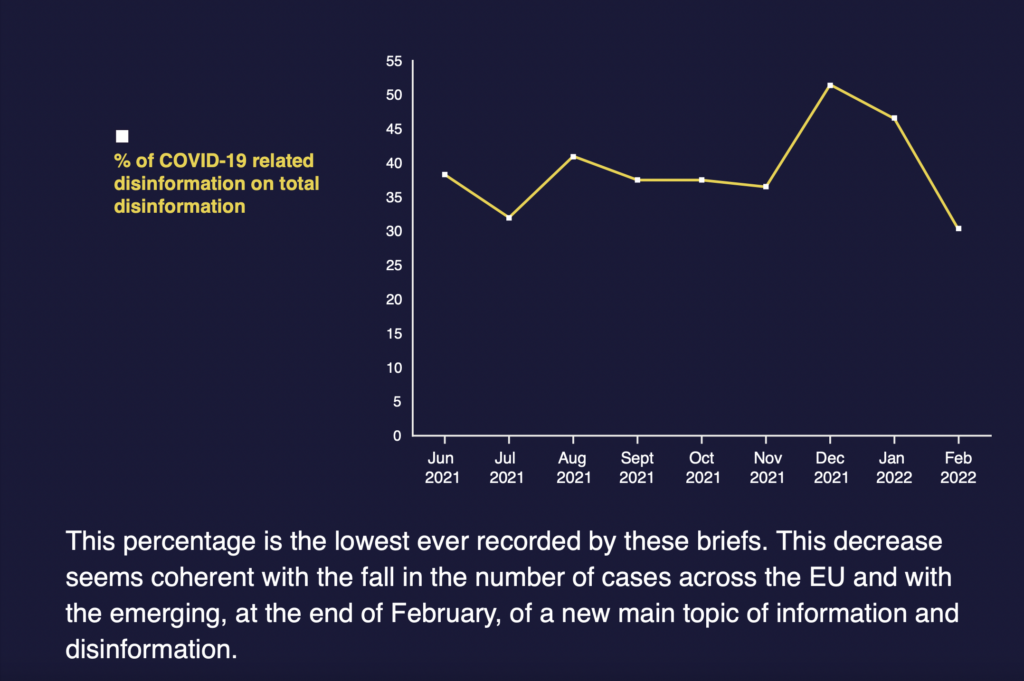
This percentage is the lowest ever recorded by these briefs. This decrease seems coherent with the fall in the number of cases across the EU and with the emerging, at the end of February, of a new main topic of information and disinformation.
DISINFORMATION RELATED TO THE WAR IN UKRAINE EXPLODED AT THE END OF FEBRUARY 2022
Out of the 1.067 fact-checking articles published in February by the 13 organizations* part of the EDMO fact- checking network that contributed to this brief, 221 (20.7%) focused on Ukraine- related disinformation.
The vast majority was published after the 24th of February. We expect that in March the Ukraine war-related disinformation will be predominant, surpassing the COVID- 19-related disinformation.
THE FOUR FALSE STORIES WITH THE WIDEST CIRCULATION IN THE EU IN JANUARY, BASED ON THE EU FACT-CHECKERS REPORTS, WERE:
- Austrian Tv broadcasted images of false corpses (alive actors) to justify COVID-19 related restrictions
- In the first day of war (February 24) Russia did not attack civilian targets
- Videogames’ images and video used to portray Russian operations in Ukrainian skies
- Videos of truck convoys spread as alleged demonstrations by truckers in different EU countries against COVID-19 related restrictions, similar to the Canadian “Freedom convoy”
* Organizations that contributed to this brief: AFP, Correctiv, Delfi, Demagog (Pl), Ellinika Hoaxes, Faktisk, Knack Magazine, Maldita, Newtral, Ostro, PagellaPolitica/Facta, Poligrafo, The Journal Fact-Check