
THE WAR IN UKRAINE AND IMMIGRATION ARE THE MOST TARGETED TOPICS IN NOVEMBER
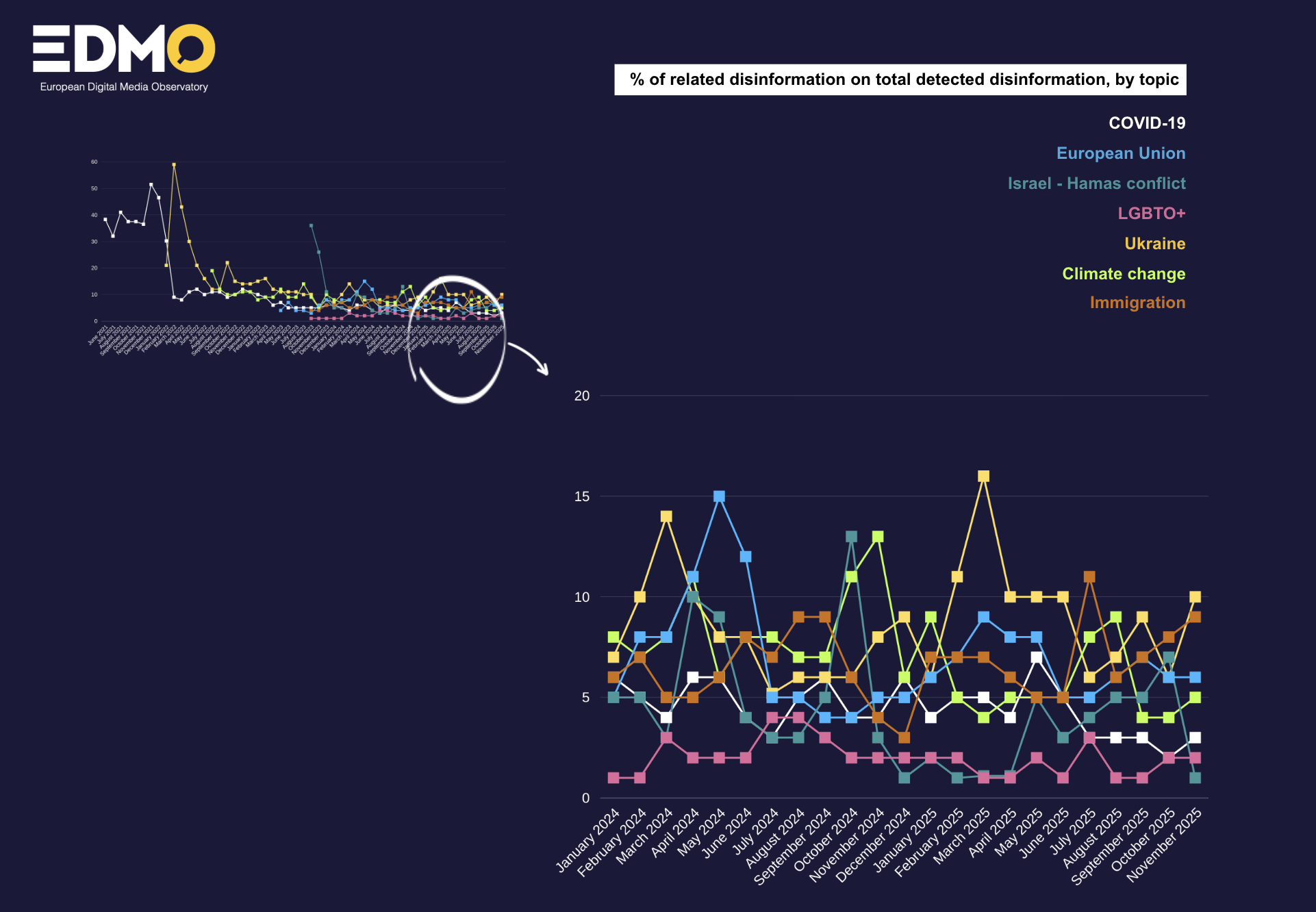
The 32 organizations* part of the EDMO fact-checking network that contributed to this brief published a total of 1.486 fact-checking articles in November 2025. Out of these articles, 148 (10%) focused on Ukraine-related disinformation; 130 (9%) on disinformation related to immigration; 87 (6%) on disinformation related to the EU; 69 (5%) focused on climate change-related disinformation; 49 (3%) on COVID-19-related disinformation; 27 (2%) on disinformation about LGBTQ+ and gender issues; and 13 (1%) on the crisis in Gaza.
Likely driven by media attention on the conflict and related peace-talks, disinformation about the war in Ukraine increased by four percentage points; meanwhile, disinformation about migrants increased by one percentage point for the fourth month in a row. On the other hand, lower attention towards the crisis in Gaza made disinformation on the matter drop by six percentage points in the month of November.
The volume of disinformation on the other topics monitored by these briefs remained stable, with only minor fluctuations.
DISINFORMATION ON THE WAR IN UKRAINE
In November, pro-Russian disinformation focused on depicting Ukraine’s military as weak and on the brink of collapse. With the aid of AI (see slide n.7), numerous synthetic videos were created and circulated across Europe, falsely showing Ukrainian troops surrendering – particularly in the Pokrovsk sector, where a Russian offensive was underway (see slide n.7). Following this trend, news circulated that “desks of shame” have appeared in Ukrainian schools for children whose fathers left military units.
The Ukrainian political leadership was also a target, with disinformation efforts aiming to depict Ukraine and – unsurprisingly – the president of Ukraine Volodymyr Zelensky as corrupted. One claim alleged that Zelensky holds Russian citizenship and luxury real estate in Moscow, while another news reported that he supposedly purchased a ranch in Wyoming, USA, for 79.5 million dollars. Given the verified and reliable reports about a corruption scandal in Kiev emerged in November, it is likely that Russian disinformation will exploit this development to reinforce its message that Ukraine is generally corrupt and therefore unworthy of being supported by its allies.
DISINFORMATION ON IMMIGRATION AND ISLAMOPHOBIC NARRATIVES
A common disinformation narrative spread by far-right groups focuses on European immigration policies, portraying them as prioritising migrants over locals. In Germany, false claims circulated about a new law allegedly forcing citizens to give up spare rooms in their homes to refugees or other citizens. In Greece, a new directive from the Ministry of Migration and Asylum was misrepresented as allowing undocumented migrants to work in the country. AI as well as traditional techniques have also been used to spread the claim that hordes of migrants are coming to Europe.
These narratives bind well with the unfounded conspiracy theory of the “Great replacement”, fueled by far-right forces who exploit the migrant background of muslim communities in Europe. In several countries, false news circulated that Muslim groups protested against Christmas, while AI-generated pictures of Christmas markets surrounded by barriers contributed to rising islamophobia online. Sensitive topics such as children education and the freedom of women were also exploited in Northern Ireland, where false news circulated that the teaching of Christianity has been banned from schools, while in Belgium a woman wearing an Islamic veil was allegedly attacked by Muslim men for showing her bare arms.
AI-GENERATED DISINFORMATION TOUCHES A NEW RECORD
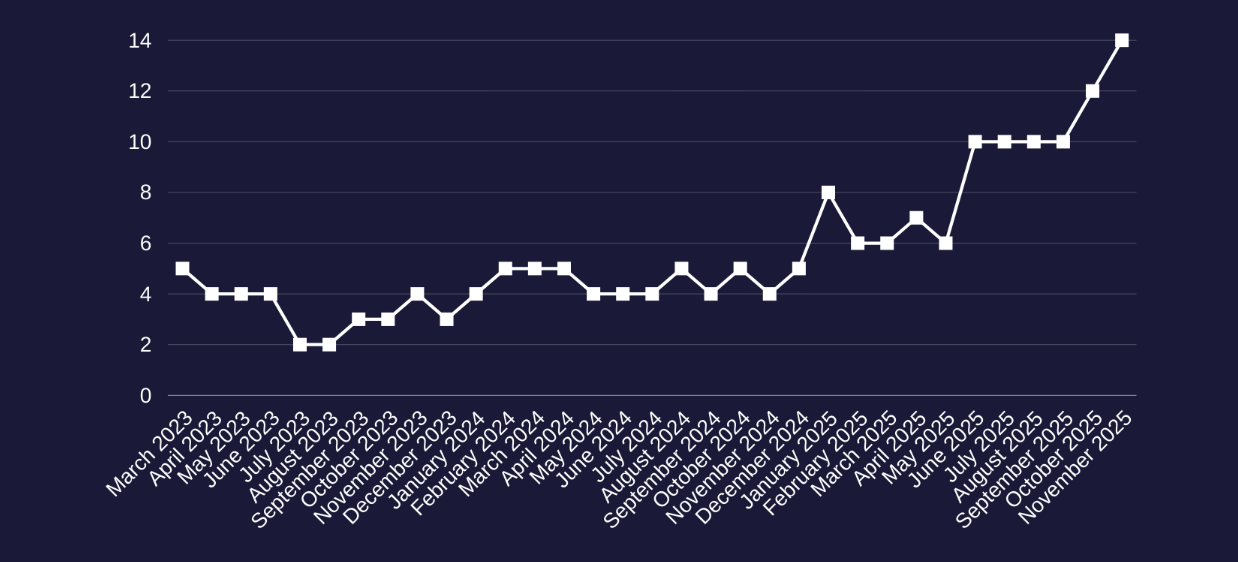
The share of disinformation stories using AI-generated content has reached a new record. Out of 1.486 fact-checking articles, 205 focused on the use of this technology in disinformation, representing 14% of the total.
As highlighted in the previous slides, AI has been consistently used to create false content related to the war in Ukraine, creating a reality that confirms Russian propaganda. This includes numerous videos of allegedly surrendering Ukrainian troops, as well as a fabricated video showing the Polish prime minister Donald Tusk yelling at Zelensky and accusing him of corruption. AI has been widely used also to create parallel realities where the political message of far-right forces is more convincing. For example, a video circulating in various countries showed a teacher in Ireland or the UK leading a classroom full of schoolchildren in Islamic prayer.
CLICK HERE FOR MORE INFORMATIONS ABOUT THE NEW EDMO MONTHLY BRIEF