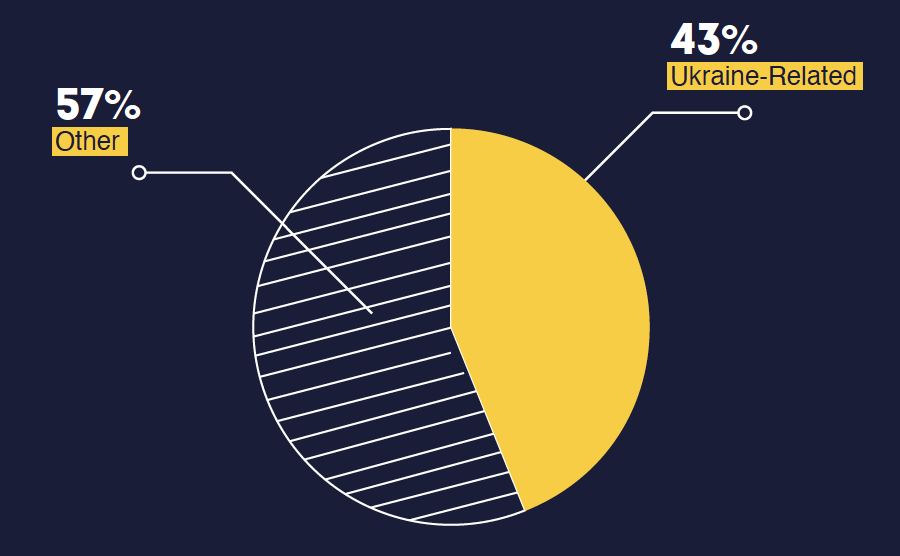
The 25 organizations part of the EDMO fact-checking network that contributed to this brief published a total of 1.337 factchecking articles in April 2022. Out of these articles, 580 (43%) focused on Ukraine-related disinformation.
This percentage is lower than the previous month (59%), but is still one of the highest percentages of disinformation about one single topic ever detected in these briefs.
The percentage’s drop is most likely due to many factors: a slowing down of the Russian offensive on the ground in April, the fading of the shock-effect registered in March, and relevant local events (e.g. the elections in France or in Slovenia).
Covid-19 related detected disinformation in April stays at the same level like in March
Out of the 1.337 fact-checking articles published in March by the 25 organizations part of the EDMO fact-checking network that contributed to this brief, 107 (8%) focused on COVID-19-related disinformation. The percentage is similar to the one monitored in March (9%).
The main narrative is an already detected one, i.e. that vaccines are very dangerous: they supposedly cause heart attacks, epathites, AIDS and in general various adverse events.
Seven narratives emerge as the most viral and persistent in detected disinformation
- Russian invasion of Ukraine is actually justified – a widespread twist detected in April is that the conflict is a “proxy war” and Russia is defending itself from NATO aggression (e.g.)
- Volodymyr Zelensky is a Nazi, a satanist, a drug addict, a coward, etc. (e.g.)
- Ukrainians and Ukrainian forces are largely Nazi (e.g.)
- Pro-Russia war propaganda (e.g.) and pro-Ukraine war propaganda (e.g.)
- Western traditional media spread false news/false images about the war (e.g.)
- Ukrainian refugees are violent, fascists, thieves etc. This narrative was detected as particularly viral in Latvia (e.g.), Estonia (e.g.), Bulgaria (e.g.), Poland (e.g.) and the Czech Republic (e.g.)
- Exagerated negative economical consequences of the war and of the sanctions in Europe (e.g.)