
DISINFORMATION ON IMMIGRATION HITS RECORD HIGH IN AUGUST
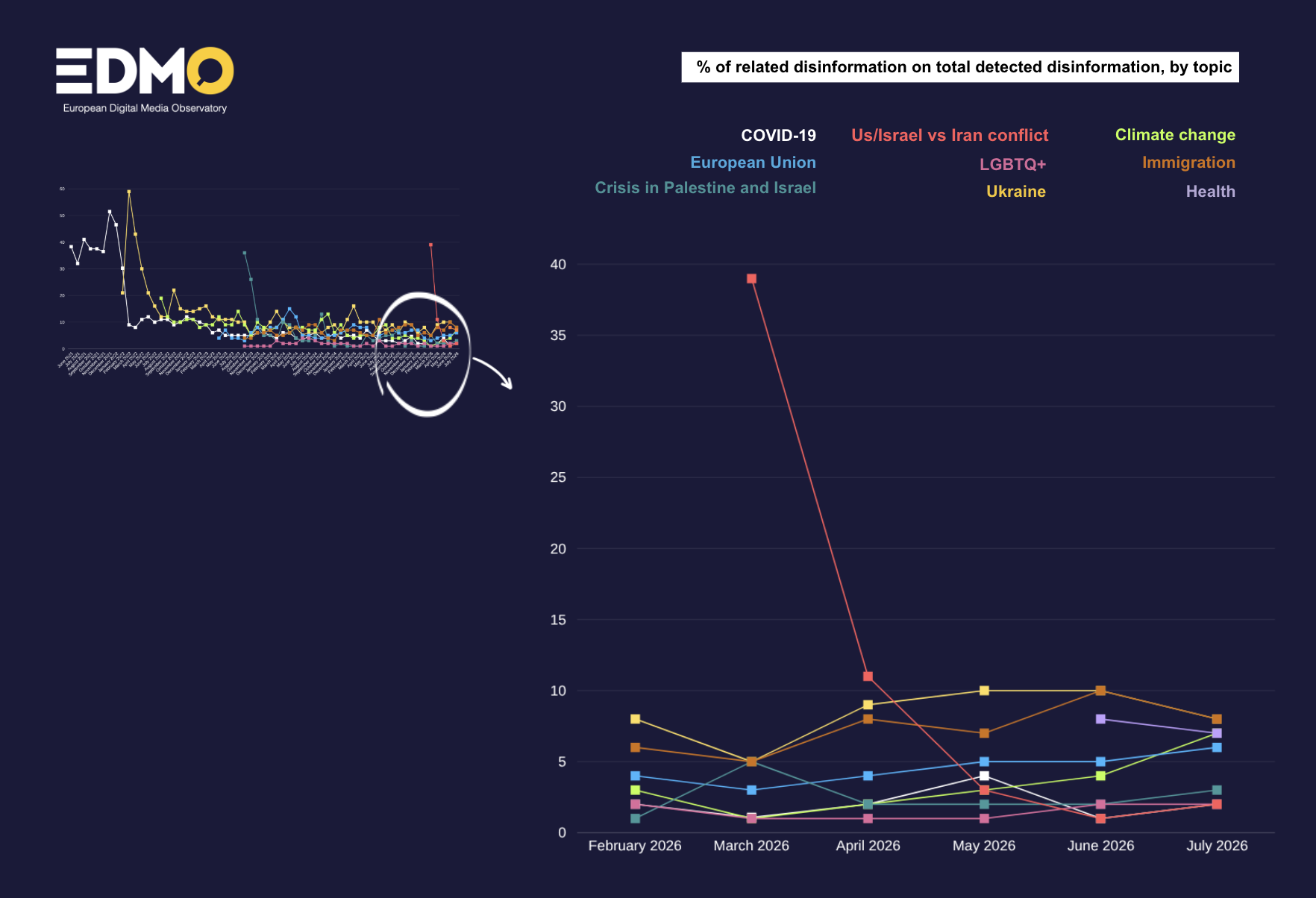
The 25 organisations that are part of the EDMO fact-checking network in the European Union and Norway, and that contributed to this report, published a total of 1,219 fact-checking articles in August 2026. Of these articles, 269 (22%) focused on disinformation related to immigration; 94 (8%) on Ukraine-related disinformation; 88 (7%) on health-related disinformation (excluding COVID-19); 70 (6%) on disinformation related to the EU; 67 (5%) on climate change-related disinformation; 44 (4%) on COVID-19-related disinformation; 15 (1%) on the crisis in Palestine; 7 (1%) on disinformation about LGBTQ+ and gender issues; and 4 (0%) on the war between Israel/USA and Iran.
In August, the share of false news related to immigration rose by fourteen percentage points, reaching a record high for the topic. Disinformation about the war in Ukraine — together with immigration, it has been one of the topics most targeted by disinformation in the past months — did not increase or decrease in August 2026. Instead, the share of false news related to Covid-19 increased by two percentage points.
After the increasing trend registered in the past three months, disinformation on climate change decreased by two percentage points. The share of false news on the crisis in Palestine also lowered by two percentage points. Disinformation targeting LGBTQ+ and gender issues decreased by one percentage point. For the first time since the beginning of monitoring false news on the war between Iran, Israel and the USA, the percentage of detected disinformation on the topic zeroed.
The share of disinformation on the other topics monitored by these reports remained stable, with only minor fluctuations.
AI-GENERATED DISINFORMATION QUANTITATIVE ANALYSIS IN THE EU
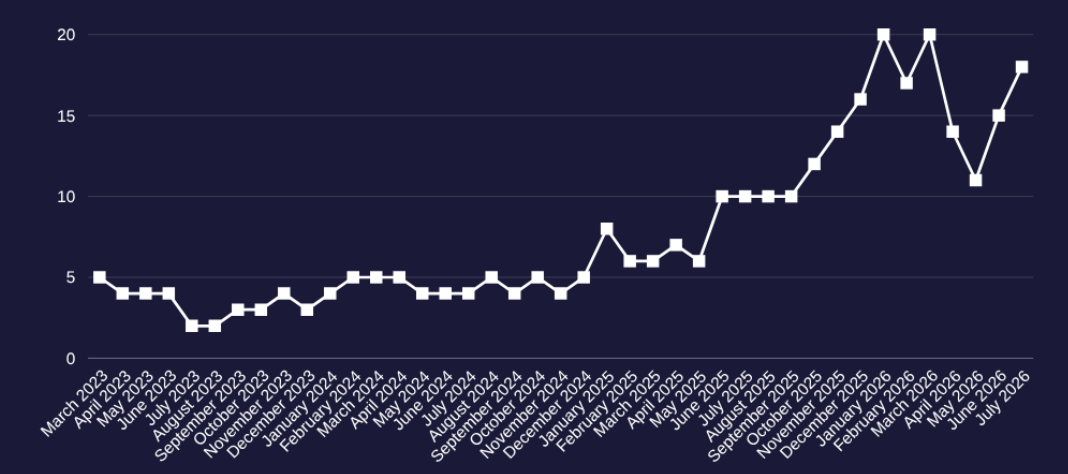
After the increase recorded in June and July 2026, the share of false news created or manipulated using AI dropped in August. Out of 1,219 fact-checking articles, 142 addressed this, disinformation techniquerepresenting 12% of the total, one of the lowest percentage recorded in 2026
In the month of August, artificial intelligence was used to create false images and videos regarding the migratory crisis in Ceuta, which in the networks of the far-right online was used for the dehumanization of migrants (see slide n.8). The crisis in Ceuta also fueled disinformation targeting migrants more broadly: an authentic video of a Sudanese migrant in Tunisia went viral in various countries with AI-edited audio to make the person claim that he came “for his money, a free house and an English woman.” Meanwhile, AI was also used to create disinformation targeting Ukrainians and, in the context of growing tensions in Poland, a fake image circulated showing a sign hanging in a Polish taxi that reads: “You can speak Ukrainian on foot.” Towards the end of the months, various AI-generated videos portraying the flooding in Nepal and Tibet also circulated.
DISINFORMATION NARRATIVES’ ANALYSIS:
1) MISLEADING CONTENT USED TO ACCUSE MIGRANTS OF CRIME AND VANDALISM IN CEUTA
In the days following the migration crisis that took place in the Spanish exclave of Ceuta on July 30-31, disinformation took the opportunity to spread anti-immigration content fueling inflammatory messages of hate. Hundreds of misleading videos and images were spread throughout Europe to accuse migrants of acts of violence and vandalism in Ceuta (see slide n.3): videos circulated purportedly showing migrant people “intimidating” locals, throwing objects and making death threats, and vandalising Christian churches and symbols. One of these misleading stories claimed that a migrant allegedly forced his way into a woman’s car, and it was also recounted by X’s AI chatbot Grok, which has been proven to repeatedly spread disinformation especially in times of breaking news. Claims also circulated that migrants had killed and eaten local cats in Ceuta, mirroring a well-known narrative, used also – for example – by Donald Trump in the US in 2024 and targeting the Haitian community in Ohio.
As the month progressed, throughout Europe various false images and videos circulated claiming to show another mass crossing in Ceuta on August 15. Previous to this date, Maldita had deeply investigated Moroccan social media groups where this crossing was being discussed and organised. Fact-checkers at Verificat also detected content directed to people in Morocco, as AI-generated videos of a girl named “Farah”, who had allegedly crossed the border on July 30 and now lives an idyllic “European dream” while encouraging others to attempt the crossing. However, the mass immigration of August 15 did not happen.
2) CONSPIRACY THEORIES RELATED TO THE CEUTA MIGRATION CRISIS
The resonance of the Ceuta migration crisis in the European information space fueled the circulation of conspiracy theories on the event, specifically alleging that it had been plotted by external actors. According to a claim circulated in Estonia and originated in pro-Iranian and anti-Western accounts, the mass crossing of migrants was organised by the United States and Israel to punish Madrid for its opposition to the Gaza war and attacks on Iran (pro-Israel accounts exploited the crisis in its aftermath, spreading the disinformation narrative that Ceuta and Melilla are Spanish “colonies” and attacking Madrid’s position on Palestine).. Another claim disseminated in Portugal purports that the Algerian army was escorting migrants directed towards Ceuta, proving that the mass crossing has been planned and fueling the conspiracy theory of the Great Replacement.
Other conspiracy theories also circulated on the fate of the migrants that crossed the border. Although the majority of them were actually repatriated, false news circulated in English that the United Kingdom would be accommodating thousands of migrants who crossed the border in Ceuta.
CLICK HERE FOR MORE INFORMATIONS ABOUT THE NEW EDMO MONTHLY BRIEF